"The Soft American": How Gym Class Was During The 1950s and 1960s.

A Changing View of Physical Education
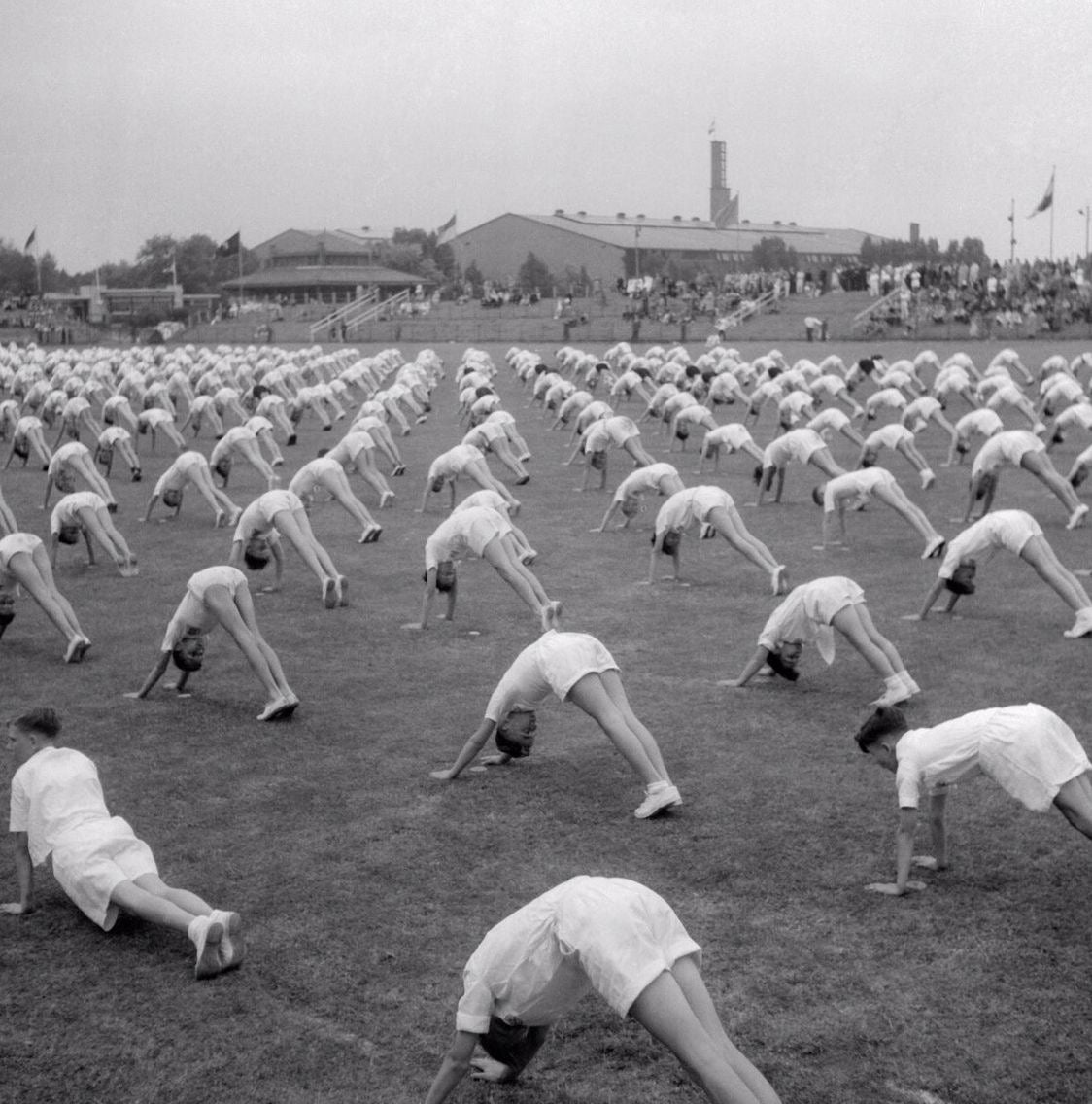
By the late 1950s and early 1960s, physical education had become a defining part of the American school experience. Gym class was no longer simply a break from the classroom—it was seen as a way to build strength, discipline, and character. Across the country, students gathered in school gymnasiums and outdoor fields to run laps, perform calisthenics, climb ropes, and take part in team sports like basketball, baseball, and track. These routines were often simple but demanding, designed to improve endurance and coordination while encouraging teamwork and perseverance.
The environment of a mid-century gym class had a rhythm of its own. Rows of students moved together through exercises, the sound of sneakers on wooden floors and whistles echoing through the gym. The goal was not just athletic performance but overall physical readiness. At a time when the country was looking closely at its place in the world, fitness began to take on a broader meaning—one that connected personal strength with national confidence.
John F. Kennedy and a National Conversation on Fitness
Few public figures spoke about physical fitness with more conviction than John F. Kennedy. Even before entering the White House, Kennedy had begun to raise concerns about the physical condition of Americans. In 1960 he wrote an article titled “The Soft American,” where he warned that modern life—marked by convenience and comfort—was quietly eroding the endurance and strength that earlier generations once considered essential.
Kennedy believed that physical vitality was closely tied to the character of the nation itself. Strength, resilience, and discipline were qualities he felt should be encouraged in everyday life, especially among young people. Once he became president in 1961, Kennedy brought this belief into the national spotlight. Through speeches and public initiatives, he helped spark a renewed interest in fitness and outdoor activity across the country.
One of the most visible efforts came through the expansion of the President's Council on Physical Fitness, which worked to promote stronger physical education programs in schools and encourage Americans to take their health more seriously. Kennedy’s message was straightforward: physical fitness was not simply a matter of athletics, but an important part of everyday life.
Fitness in the American Schoolyard
As this conversation spread, schools began to place greater emphasis on structured physical education. Many introduced national fitness tests that measured strength, endurance, and agility. Students were asked to complete exercises like pull-ups, sit-ups, shuttle runs, and distance running—benchmarks that reflected a growing belief that fitness could be developed and measured.
But beyond the tests and programs, physical education during this era carried a cultural identity of its own. Students wore simple cotton gym shirts and athletic shorts, and classes were often held in sunlit fields or echoing gymnasiums that felt like stages for youthful energy. The experience was shared across towns and cities throughout the country, creating a familiar scene that many Americans still remember decades later.

A Cultural Moment That Endured
The emphasis placed on physical fitness during the Kennedy years helped shape how generations of students experienced school life. Gym class became a daily ritual—part exercise, part discipline, and part social experience. It was where students learned the value of effort, resilience, and cooperation, lessons that extended well beyond the gymnasium walls.
Looking back, the mid-century focus on physical education reflects a moment when strength and vitality were seen as essential elements of the American character. Kennedy’s role in bringing attention to youth fitness helped define that era, reinforcing the idea that maintaining physical health was both a personal responsibility and a reflection of national spirit.
Exploring this period more closely reveals how physical education during the 1950s and 1960s shaped youth culture, school life, and the broader identity of mid-century America.